The REG Temple is the official website for actor, author and director Richard E. Grant.

Richard E Grant: “Internet dating? I can’t ever imagine falling in love with anybody else again”.
YahooNews.com – 24th December, 2023
By Chris Harvey.
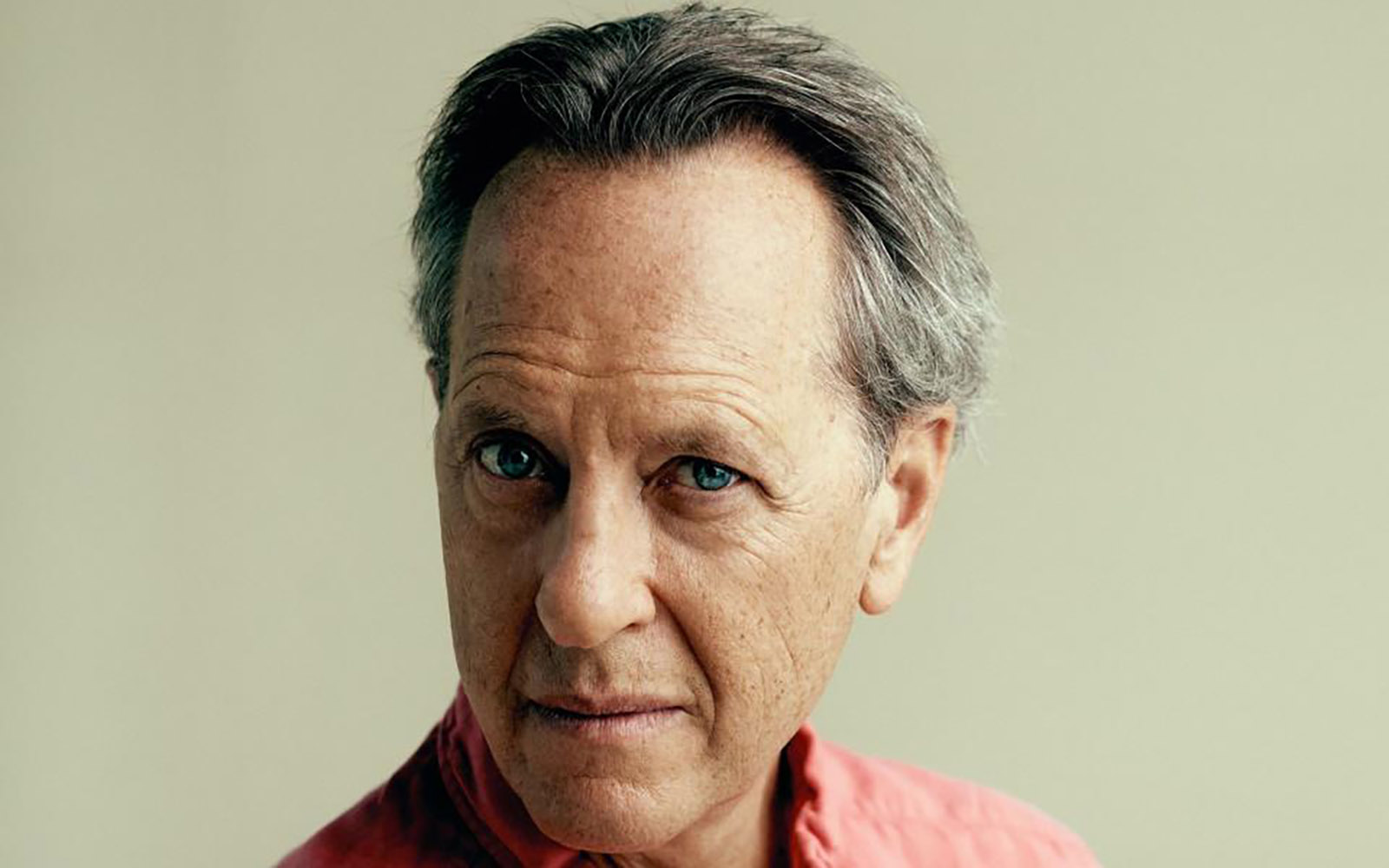
‘I will never understand my wife’s death’: Richard E Grant – Sophia Spring/Eyevine.
Richard E Grant is a “Christmas-a-holic, unashamedly so”. He put up his tree, as always, on December 1 – a real one, “the scent is so beautiful” – and thinks that having your house brightly decorated in the middle of winter is “a fantastic tradition. I will never give that up.” Three years ago, on Christmas Eve, the love of his life, the dialect coach Joan Washington, his wife and partner of 38 years, was diagnosed with lung cancer. She died in September 2021. This time of year, though, remains tied to all the memories that the actor shared with Washington and their daughter Olivia – Oilly – as a family.
Oilly arrived in 1989, three years after their first daughter, Tiffany, was born too premature to survive. Since Oilly was a baby, Grant tells me from his London home, “we’ve had pictures of her every year until she was 18 in little cut-outs as Christmas decorations on the tree. Her whole life is on that tree. And the three Christmases without Joan, I’ve also put pictures of our lives together on the tree. She might not physically be here, but her spirit and the things that we did together, and we cooked together, are visible and tangible.”
Christmas here contrasts hugely with Grant’s childhood in Swaziland (now Eswatini), where he grew up the son of the education minister of the former British protectorate, which he likens to a kind of “sub-equatorial Ealing in the 1950s”. There was no television but, he recalls, the expat population would stand to toast the Queen when she gave her speech on the radio. “And with the two-hour time difference, it usually meant that the toast was quite wobbly, because of all the alcohol that had gone down by then.” It was hot, too; Boxing Day meant swimming or cricket or shooting at watermelons.
Listening to the monarch’s speech remains a tradition for Grant, but this year he will also be able to tune in later to hear himself reading The Wombles on Radio 4. Coming of age abroad, Grant had never heard of Elisabeth Beresford’s books nor seen the much-loved 1973 TV series, narrated by Bernard Cribbins, much less danced to the succession of top ten hits by Mike Batt’s novelty pop group The Wombles. Yet the special affection in which these furry litter-collecting denizens of Wimbledon Common are held here became clear when everyone he told about the gig immediately sang the TV show’s “Underground, overground, wombling free” theme tune to him.
“I now realise that when something is so embedded in people’s childhood, to have somebody else come along and read it is probably sacrilegious,” Grant says. “Not unlike the [2018] movie version of Mary Poppins – you know, how dare you try to dislodge Julie Andrews? The answer is you can’t. I can’t replace Bernard Cribbins… people have said, ‘you’re gonna be in for the chop’, so that may happen.”
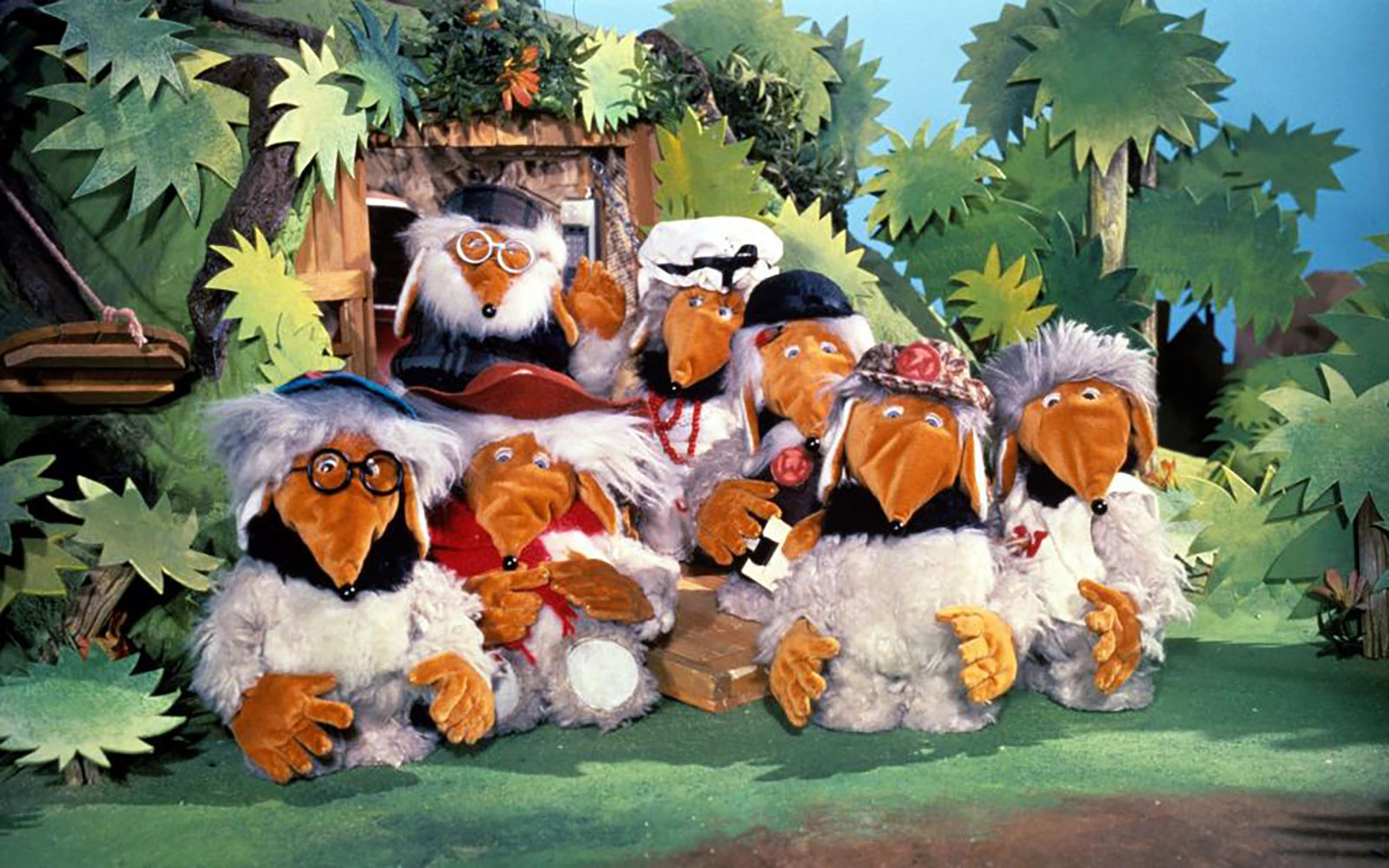
The Wombles: Grant had never heard of Elisabeth Beresford’s books nor seen the much-loved 1973 TV series – ITV/Shutterstock.
As for the “updating” of classic texts, especially children’s literature, for modern sensibilities, he says, “I have an incredibly strong view on that.” He compares it to rewriting history. “When you’re in a school playground, people are not, in my experience, politically correct. They can be incredibly cruel; and fairy tales, I think, prepare you for that. The stories that people love, like Roald Dahl’s, are full of fear and danger and all the things that you respond to as a child, and that fire your imagination. So the idea that you have to soft-pedal that – I just think that it’s censorship.”
He adds that “what I have loved about Britain is that somebody can stand on a soapbox in Hyde Park, and rant about whatever they want, and they won’t be locked up or have their hands chopped off or any of the things that happen in countries where there is no free speech”.
It would be a little unfair to point out here that Radio 4’s The Wombles, abridged as it is, apparently sidesteps the detail that Beresford’s Great Uncle Bulgaria – patriarch of the Wimbledon Wombles – can appear so alarming to misbehaving youngsters that, as she wrote, “many a young Womble has come out of [his] room with his (or her) fur standing up on end and his (or her) teeth chattering”. But were there ever an actor equipped to capture the more startling elements of this avuncular figure, Grant surely would be that man.
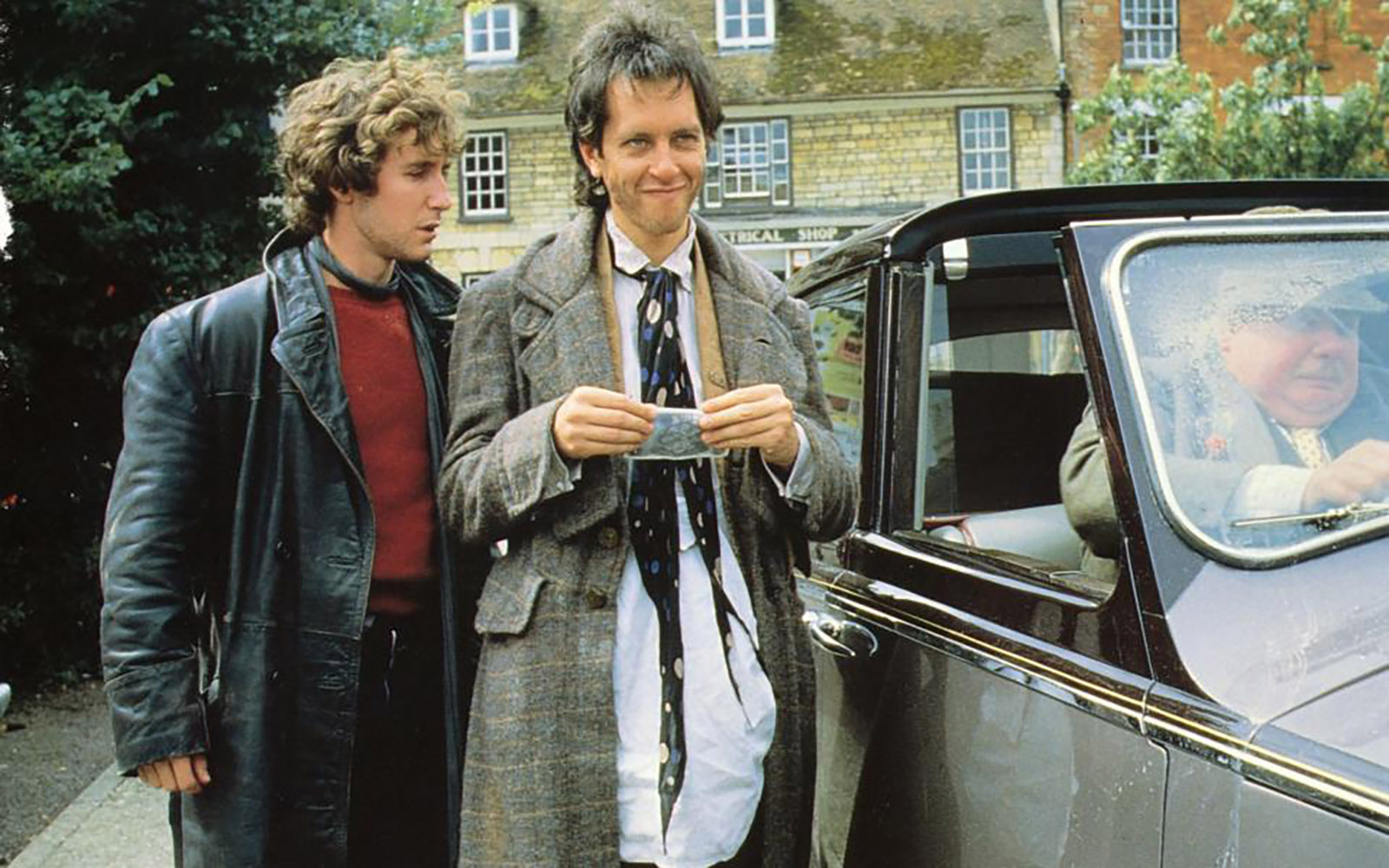
Fame arrived with his debut film role as an out-of-work actor in 1987’s Withnail and I – Tony Gale.
Fame arrived with his debut film role as an out-of-work actor, and outrageous alcoholic, in 1987’s Withnail and I. Its portrait of desperation was close to the bone, though, for Grant, who had gone nine months without a part before being cast. “You feel like your self-esteem is decimated,” he says. “If you’re an actor, people say, ‘What have I seen you in?’ or ‘What are you going to be in?’ And if you can’t say anything, you can see people looking at you as though you don’t have a chance. It’s grim.”
Three decades later, he was not only a household name but an Oscar nominee for Best Supporting Actor in Can You Ever Forgive Me? (2018) playing Jack Hock, another alcoholic and drug addict, alongside Melissa McCarthy’s Lee Israel, the real-life biographer who took to forging collectible letters by famous figures for money. The difference between Withnail and Hock, Grant says, is that the latter “feels that he’s entitled to Laurence Olivier’s career, whereas the other one is just thinking, if I can get a drink or another meal out of somebody, then that’s justified”.
Both are the kind of extreme character at which Grant (a teetotaller with a physical intolerance to alcohol) excels, although he maintains that had he played John le Carré’s spymaster George Smiley as his breakout role, “quiet and reserved and measured, I’d have had a completely different career”.
He can pinpoint outsized elements in his own life, however. He confesses to having an obsessive personality – “all or nothing is what I recognise as my character” – and the boyhood memory of waking up on the back seat of the family car to witness his mother “bonking my father’s best friend on the front seat”, has left its mark.
After she walked out on the family, his father began drinking heavily, and was abusive towards his son to the point of trying to shoot him, drunkenly missing. “Dealing with my father’s alcoholism meant that I was used to very, very extreme behaviour. So accessing that doesn’t feel like it’s beyond your comfort zone.” His mother, from whom he was estranged for many years, before a partial rapprochement, died in July, aged 93; Grant described his response on Instagram as “resignation”.
Since Grant arrived in England in 1982, his career has had its own underground, overground narrative. He was in both 2001’s Gosford Park (below stairs) and Downton Abbey in 2014 (above stairs, as a “ghastly art dealer”, in the words of Hugh Bonneville’s Earl of Grantham). But in Saltburn, just released on Amazon Prime, Grant makes it all the way to the head of the table as Sir James Catton, whose large stately pile plays backdrop to the film, and gives it its title.
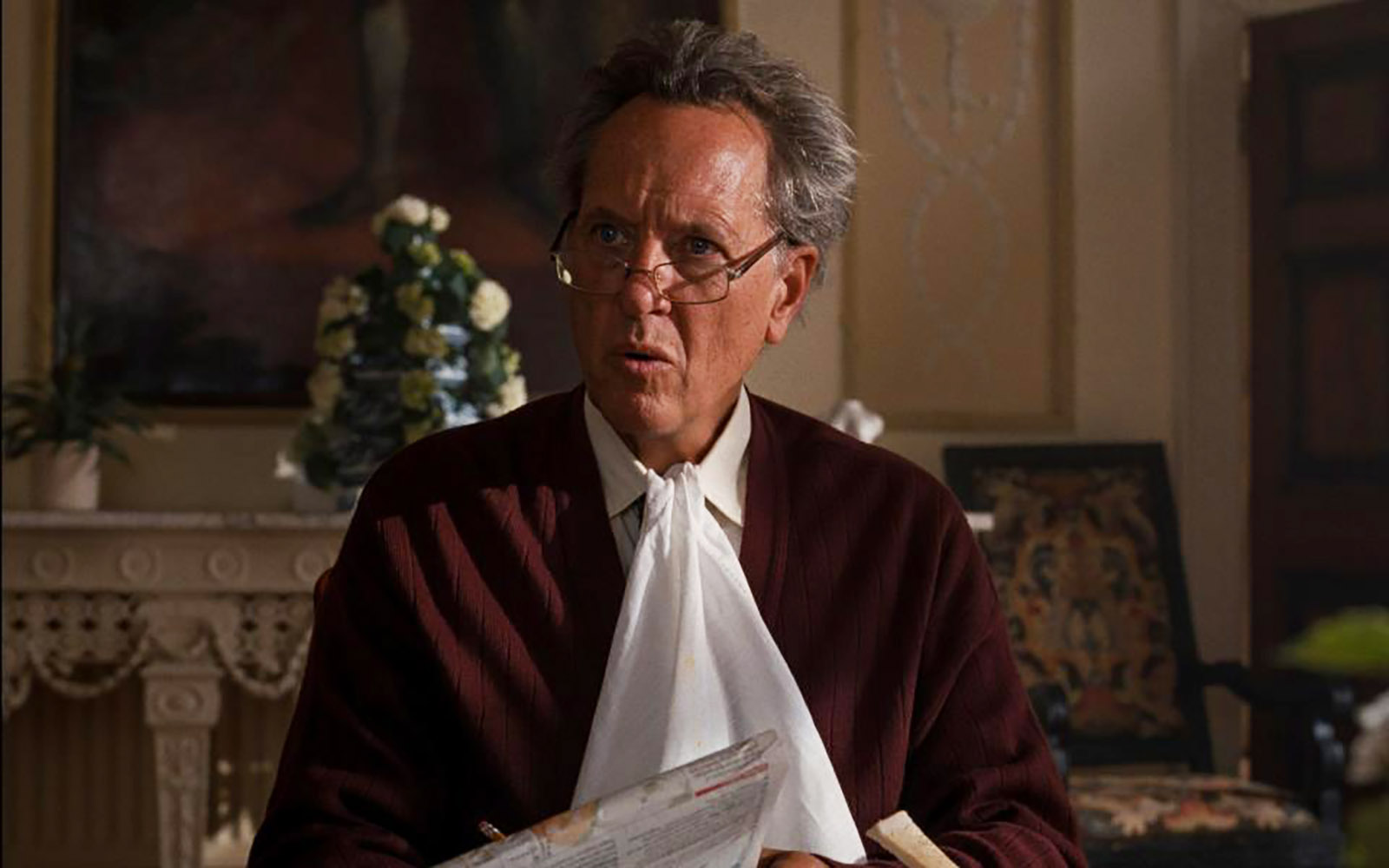
Richard E Grant as Sir James Catton in Saltburn – Amazon Content Services LLC.
The film revolves around a middle-class interloper, who gains entry to the inner sanctum of a wealthy landed family – glamorous, charming and altogether eccentric. When I saw it recently at the cinema, Saltburn brought gasps of shock and lots of laughter.
Grant has known its Oscar-winning writer and director Emerald Fennell (daughter of jeweller to the stars Theo Fennell) since she was 13. Many will remember her playing Patsy Mount in Call the Midwife (2013-17) and the young Camilla Parker Bowles in The Crown (2019-20). Fennell recently described her life as one of “grotesque privilege” (she’s a product of Marlborough College and Oxford). “She has this incredibly posh vernacular,” Grant says. “There’s a kind of jolly hockey sticks quality to the way her enthusiasm erupts but she’s incredibly precise in what she is trying to achieve in every scene.”
Saltburn has been “so divisive”, he acknowledges, but accusing it of borrowing from The Talented Mr Ripley or anything else (this paper’s critic called it “Brideshead Regurgitated”) misses the point, he insists. The film is deliberately referential, especially for a generation that knows all those influences.
Its vision of upper-class life is “certainly not the Julian Fellowes version,” Grant notes. “It’s set in 2006, as opposed to Downton Abbey, which is set in the 1920s, or Gosford Park, which is set in 1932. So inevitably those changes are enormous, but the way of life of the aristocracy doesn’t seem to have essentially changed very much from 100 years ago.” Even if the entitlement that comes with land and heritage has to some extent “been superseded by the internet billionaires that now exist”. He starts to giggle when I ask if he’s ever met real-life toffs as eccentric as these. “Oh yeah, oh most certainly, yes, definitely.”
Grant’s connections go to the very top. King Charles is a friend, who made a special visit – bearing fresh mangoes and scented roses from the gardens at Highgrove – to the Cotswold cottage of Grant and Washington, when she was in the late stages of her illness. Grant wrote about the visit, and of Charles’s “empathy and tenderness” in his very affecting memoir A Pocketful of Happiness (2022).
I wonder if, having gone through the trauma of losing his wife, he can talk about how he has been able to carry on without her? “I’ve now accepted that I will never understand it,” he says, “trying to imagine not being here is beyond my capacity for thinking. So, I write a letter to Joan every night about what’s going on, and I find that it feels like I have a physical, tangible, ongoing conversation with her that’s written down. I’ve found that really, really helpful. Anticipating what she might think about this, or what is her opinion about that? Even the most mundane things.” Writing to her, tonight, he notes, “she’ll say, you know, ‘What did Chris look like?’ Well, he’s got glasses…”
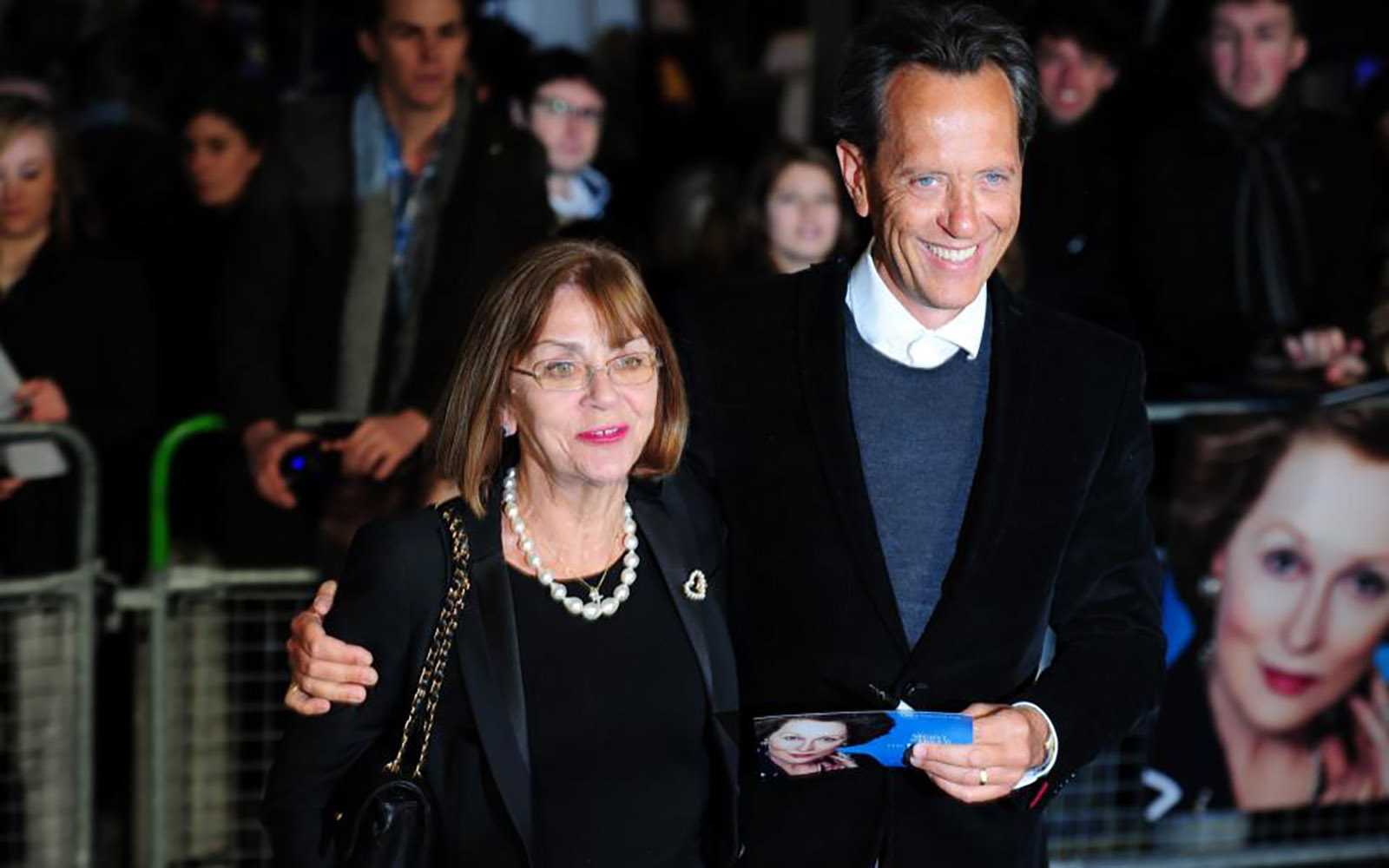
Richard E Grant and his late wife Joan Washington – LEON NEAL/AFP via Getty Images.
I should mention that by this point, Grant knows as much about me as I do about him. He would have made an excellent journalist. “It seems so rude and incurious,” he says, not to ask questions back. One imagines his warmth breaks down barriers quickly among the ever-changing faces in the life of an actor. The friendships he has made along the way are what he remembers from his long career, he says, “more than whether the thing was a great movie”.
He loves how actors can come from shooting a very dramatic scene “then go back to saying, ‘Have you put your Christmas tree up? Where are you going on holiday? Who’s bonking who?’ All the gas.” He places “enormous value” on friendship. “My friends have got me through everything in my life. I would feel absolutely bereft without that.”
He thinks that British attitudes to grief have changed since the “great watershed moment when Diana was killed in that car crash at the end of August 1997… it was as though you were given licence to express your grief and to talk about it. That was a real legacy of what her life meant for people. Certainly my daughter’s generation – she’s 34 – is kind of no-holds-barred about anything. I love that. I think it’s very healthy.”
Grant is a youthful, attractive 66. In A Pocketful of Happiness, Washington often teases him about potential candidates with whom he might find romance after her death. I gently ask if he has contemplated the possibility of meeting someone else. “Um… I’ve been asked that a lot,” he says. “And I’ve been set up by people with other people. But I think that what was so extraordinary about her is that I felt like I was truly seen and understood by another human being in a way that nobody else has even come near. So, my expectation that that could happen again is so hard to conceive of, not that it couldn’t happen, but I’m not looking. At this point, I can’t imagine ever falling in love with anybody else again, which is not to say that it won’t happen or it can’t happen, but I’m certainly not internet dating.”
He is not “hanging up the tights” either. He’s been filming a TV satire about the making of a superhero film, conceived by Sam Mendes and Armando Iannucci, and last month finished shooting the film Death of a Unicorn in Budapest with Paul Rudd and Jenna Ortega – it’s “a whole new genre for me,” he says, “it’s billed as an eco-comedy-horror-drama”. But first come those early eco-warriors of Wimbledon. I wish him a Wombling Merry Christmas and say goodbye.
The Wombles begins on Radio 4 at 6.15pm on Christmas Day. All episodes are available on BBC Sounds.